Google Analystics

Friday, 22 January 2016

Implementing ISO 9001:2015 – The Process Approach

Paul Simpson
In his excellent post, Implementing ISO 9001:2015 – The Process Approach, blogger Paul Simpson focuses on the ‘deep dive’ required to really understand our processes in order to capture them accurately.

"We’ve probably all seen the extremes – on the one hand perhaps a wall full of mind sapping detail, on the other a series of banal boxes neither helping staff and leaders.  So this quote, ‘Everything should be made simple as possible, but no simpler‘ attributed to Albert Einstein, is a useful stimulus in thinking about making process analysis useful, and to help ISO 9001:2015 registration.

"The point of analysing our processes is to ensure we understand how each process works and what we need to do as individuals, leaders and organisations to ensure the process operates efficiently and delivers effectively."

"We have to break each process down into as few simple steps as possible based on our experience of how they work in real life. And we must ensure that we understand their relationships and contribution to the other processes in the overall system in generating outputs for the customer."

Read the full post here: Implementing ISO 9001:2015 – The Process Approach

Tuesday, 19 January 2016

ISO 9001:2015 - What are the BIG CHANGES?

What are the big changes in ISO 9001 2015? Don't get trapped in the weeds as you transition from ISO 9001:2008 to ISO 9001:2015.

Monday, 4 January 2016

The "Gemba Walk" Pope surprises an Italian family with a Christmastime call

According to an article in the LA Times, when Pope Francis was still an archbishop in Argentina some years ago the archdiocese had a limo that that he could have driven around in. Parishioners of Our Lady of Caacupe tell how, instead of taking the limo to get to the church, he would take the bus and then walk half a mile to the church operating out of a converted warehouse. People knew him and would walk with him. "Once I met him at the bus stop and offered to carry his briefcase the rest of the way, but he wouldn't hear of it," said Monica Morales, a church volunteer and mother of six.

Fast forward to December, 2015. The Pope, who sometimes eats in the staff canteen and who already has a reputation for occasionally picking up the phone and calling ordinary people, repeats the surprise, calling a family whose little boy had written him out of concern for his ailing aunt. He is reported to have had a 15 minute chat with the boy's mother, putting her at ease and enquiring about the family.

The Pope has probably never heard of 'gemba' or 'genchi genbutsu', but he sure knows how to practice it. Cynics might argue that this is just a PR stunt. I cannot prove that it is not. However, in none of these events has the publicity come from the papal marketing department; it is the people that he touched who went public, directly or indirectly. Vatican comment has always been very muted about these incidents. In my opinion the Pope sees this as a two-way street the value of which he learnt long ago in the barrios of Argentina. Sure, he is being a pastor and setting example, and so on. But he is also observing, engaging and learning. He learnt to deal compassionately with pastoral and moral problems not so much out of text books but by being close to the people who were suffering. He encountered the problems by engaging with the people who have the problems, listening to them, learning from them, empathizing with them.

Without going to gemba a manager is operating in an ivory tower. Who would have thought that the Pope has something to teach managers and CEO's?  Genchi Genbutsu. "Go, Look, See". Then you will discover opportunities for kaizen improvements.

(With material from Religion News Service and Los Angeles Times.)

Tuesday, 29 December 2015

A Crisis of Junk Science

When the noble science of Science degenerates into junk science the ripples of scepticism resulting from feelings of betrayal and anger have the potential to become a tsunami.
"In the U.S., the Federal Bureau of Investigation admitted last April that hair identification testimony from its forensic scientists was flawed in 95 per cent of the 268 cases before 2000 it has reviewed so far. In 32 of those cases, the defendant was sentenced to death."
The above is from an op-ed by criminal defence lawyer, Daniel Brown, in today's Toronto Star.

Before Canadians feel too smug here's another snippet:
"Bad science is an alarming thread that runs through almost two dozen Canadian wrongful murder convictions exposed in recent years by the Association in Defence of the Wrongly Convicted (AIDWYC). The roll call of errors in these cases includes clothing fibres mistakenly believed to match one another; experts who incorrectly concluded that dog bites on a dead child were knife wounds inflicted by her mother; inept autopsies that misinterpreted the cause of death; biology samples contaminated by a government lab technician; and hair samples that anchored a murder conviction, yet later turned out to be worthless."

The only consolation for Canadians is that Canada does not have a death penalty. Innocent people have not been killed; they have simply languished in jail while their children were removed and placed in group homes, foster care or adoption.

In his piece, Brown observes,
"Wealthy defendants are able to afford top lawyers and expert witnesses, but indigent accused or those from marginalized communities frequently bear the brunt of bad science evidence. They cannot match cases assembled by well-funded police and prosecutors, sometimes pleading guilty to obtain a reduced sentence in the face of superficially overwhelming evidence."

The Alchemist by Pieter Bruegel

Brown makes some conclusions that I think are predictable and precisely to my first point about scepticism:
At precisely the time we ought to be exercising heightened skepticism, a mistaken belief is developing that wrongful convictions are a thing of the past.

And again…
Judges must be better trained to weed out junk science and unwarranted opinions offered by experts. And they must warn juries about the perils of placing too much reliance on science or picking sides in a battle of experts.
This reminds me of manufacturers relying on inspectors to 'inspect in' quality. As W. Edwards Deming pointed out decades ago, that is far too late in the production cycle and way too susceptible to error. Would we fly to our vacation spots knowing the plane we are on did not have adequate requirements and design review, risk and failure modes analysis, verification and validation prior to 'inspection'? Heck, let alone fly, we don't even allow cars on the road that have not been built according to this process, and yet we trust that our 'scientists' all use correct scientific methods and design of experiment even though they often do not bother with peer review. Hello?


Read the entire op-ed here: Junk science is undermining our justice system

Photo credit: http://www.wikiart.org/en/pieter-bruegel-the-elder/the-alchemist

Tuesday, 22 December 2015

A Look Back at the Early Days of Lean

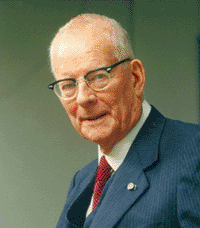
Dr. W. Edwards Deming
This fascinating article, A Look Back at the Early Days of Lean  by John Dyer was published by Industry Week back in September. John is one of those people who was lucky enough to have done a (now famous) 4-day seminar with Dr. W. Edwards Deming.

The article contains seven of John's favourite quotes by Dr. Deming and a link to a very informative podcast that he did with Mark Graban.

Here are 3 of his Deming quotes that I particularly like.
“No knowledge without theory. Schools teach information, not knowledge. Information is not knowledge. People go to Japan (to copy what they are doing there) and don’t learn anything because they don’t understand the theories. I hope they enjoyed the ride!”

“We must focus on win-win. Would you want to be married to a loser? Would you want to be in business with a loser… work with a supplier that is a loser or employees that are losers? We must work as a system, Union and Management. Everybody wins.”

“What state of a company is in the best position to improve quality? A healthy company is in an excellent position to improve and has the greatest obligation to improve. A company on the rocks can only think of survival.”

Wednesday, 16 December 2015

Lean 101 - A 5-Part Introduction to Lean - from pretty high up

If you know nothing, or just a very little, about Lean, here is a five part, easy-to-follow video series that will introduce you to all the major concepts and elements. The whole series takes just under 50 minutes to watch.

The first video on the history of lean is optional. stands alone and can be watched any time. I do recommend watching the others in sequence as they build on each other.

The full series consists of:
Brief History of Lean
What is Lean?
What is Waste?
What is Heijunka and Value Stream Mapping?
What is Kaizen?